
Table of Contents
Warm oats with berries before work. A rice bowl with roasted vegetables for dinner. A comforting chicken and vegetable soup on a cooler evening. Learning how to use a rice cooker can bring more variety to everyday meals, starting with a few straightforward steps.
The Bear mini rice cooker keeps the controls simple with Cook and Warm. Beyond rice, you can explore oats, soups and pasta using suitable recipes, without navigating a long list of preset menus.
How to Use a Rice Cooker: Start with Your First Batch
1. Measure the rice
Use the measuring cup supplied with your cooker and take level measures. Consistent portions make it easier to repeat a result you like.
Think about what will go alongside the rice. Roasted salmon, herb chicken, or a mix of courgettes, peppers and chickpeas can turn a simple batch into a complete meal.
2. Prepare the rice and add water
Check the rice packet to see whether rinsing is recommended. If it is, rinse in a separate bowl or suitable sieve, then drain before adding the rice to the inner pot.
Add water according to the cooker’s instructions for your rice type and quantity. If the manual uses matching cup measurements and water lines, put the rice in first, then fill to the corresponding mark.
Keep the ingredients within the stated cooking capacity.
3. Place the pot and press Cook
Make sure the outside and bottom of the inner pot are clean and dry. Place it securely inside the cooker, close the lid and press the cooking switch.
Check that the Cook indicator is on. Keep the lid closed during cooking rather than repeatedly opening it to check progress.
Use the time to prepare a salad, roast your vegetables or set the table.
4. Rest, fluff and serve
Once the rice has finished cooking, let it rest briefly with the lid closed, following the product instructions.
Open carefully, keeping your hands and face away from escaping steam. Gently fluff the rice with the supplied paddle before serving.
If you need to hold it before eating, use Warm within the conditions and time limits stated in the manual.
More Than Rice: Breakfast, Lunch and Dinner Ideas
Simple controls can still leave room for different meals. The variety comes from the ingredients and cooking method, rather than a separate button for every dish.

| Meal | What to make | Finishing touches |
|---|---|---|
| Everyday breakfast | Warm oat porridge | Banana, berries, chopped nuts or a little cinnamon |
| An easy lunch | A rice bowl | Roasted vegetables, chickpeas, eggs or cooked chicken |
| A weeknight dinner | Tomato pasta | Spinach, mushrooms and Parmesan added before serving |
| A cooler-weather meal | Chicken and vegetable soup | Carrots, leeks and stock, with bread on the side |
Oats for a warmer start
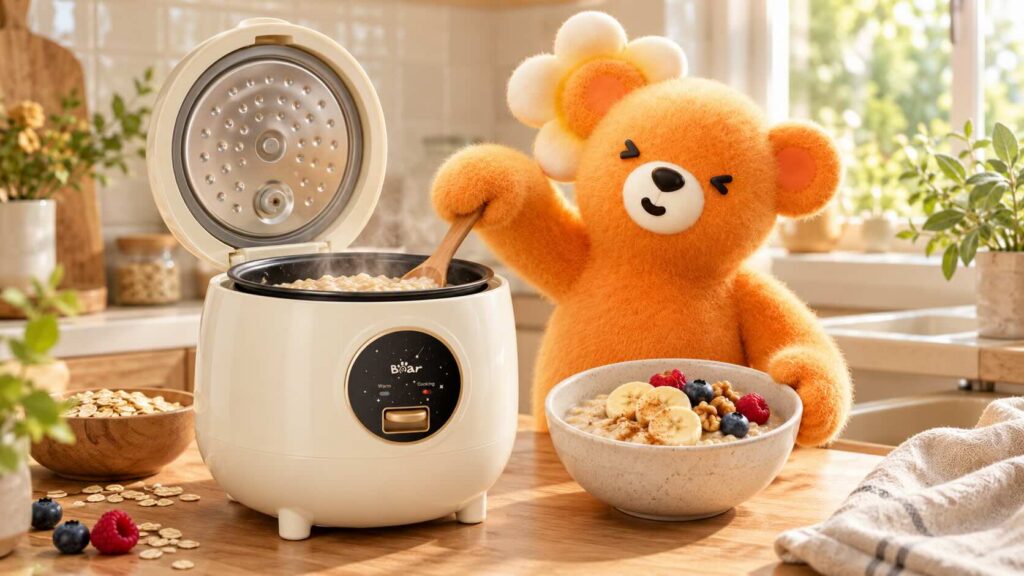
A bowl of oats can change with what you have in the kitchen. Try banana and cinnamon for a mellow flavour, or berries and nuts for freshness and crunch.
Prepare the oats using a recipe suitable for the cooker and the type of oats you have. Add fruit, yoghurt and other toppings after serving so everyone can finish their bowl differently.
Chicken and vegetable soup for cooler evenings
Cooked chicken, carrots, leeks and stock make a useful starting combination for a simple soup. Serve with bread for a relaxed lunch or dinner.
Cut vegetables into similar-sized pieces and check that they are tender before serving. Using cooked chicken keeps preparation straightforward, but the finished soup still needs to be thoroughly heated.
Pasta for a simple weeknight meal
Tomato, spinach, mushrooms and short pasta shapes offer another way to use the inner pot. Choose a recipe suitable for the cooker and follow its liquid quantities and method.
Check the pasta’s texture during cooking and finish when it reaches the tenderness you prefer. Serve promptly, adding Parmesan or fresh herbs at the end.
For oats, soup and pasta, monitor the food and finish cooking according to the recipe. Do not rely on the automatic change to Warm used for rice as the completion signal for every dish.
How to Use a Rice Cooker: Water, Controls and Better Results
Start with the right Bear rice cooker ratio
There is no single Bear rice cooker ratio for every rice variety and batch size. Use the supplied measuring cup with the water guidance for your model.
For example, where the manual specifies the matching-line method, two supplied cups of rice go into the pot before water is added to the corresponding “2” line. That does not mean pouring in two additional cups of water.
Once you have a suitable starting method, keep the rice variety and portion size consistent. Make small adjustments between batches if you prefer a firmer or softer result.
Adjust the method when you change the food
The water quantity for rice should not be carried straight over to oats, pasta or soup.
| Food | What matters most |
|---|---|
| Rice | Accurate rice measurement and the correct water quantity |
| Oats | A suitable oat-to-liquid recipe and enough space for foaming |
| Soup | Enough liquid for the recipe, without exceeding the permitted fill level |
| Pasta | The recipe’s liquid quantity and regular checks for tenderness |
Start with a modest batch when trying a new recipe. Keep a note of the quantities and result so you can repeat your favourite meals.
Use Cook and Warm for their intended purposes
Cook heats the food. Warm holds cooked food according to the product instructions.
When making oats, soup or pasta, keep an eye on foaming, liquid levels and doneness. Simple controls make the appliance approachable, but each dish still needs an appropriate method.
Avoid filling the pot to the brim. Ingredients can expand or foam during cooking, and different dishes may have different capacity limits.
A Place in Your Kitchen, with Easier Cleaning Afterwards
Deep blue, warm gold and everyday tableware
The deep-blue body and gold details give this Bear cooker a distinctive place on the worktop. Pair it with pale wood, white ceramic bowls and a neutral tea towel for a simple, welcoming kitchen setting.
The appeal is in everyday use: oats beside a morning coffee, rice ready for dinner, or a warm bowl of soup at the end of the day.
Retailers planning a compact kitchen appliance range can explore Bear’s product brochures for a broader view of the collection.
Clean the removable inner lid and pot
The removable stainless-steel inner lid gives access to an area that collects steam and food residue. Follow the supplied instructions when removing and refitting it.
Switch off, unplug and let the cooker cool before cleaning. Wash suitable removable parts with mild detergent and a soft sponge, avoiding tools that could scratch the pot’s surface.
As explained in Electrical Safety First’s rice cooker guidance, the electrical base must not be immersed in water. Make sure the parts are properly dry before reassembling.
Save leftover rice properly
If you are keeping rice for another meal, do not leave it in the cooker to cool slowly.
Follow the Food Standards Agency’s rice storage advice: cool it quickly, ideally within one hour, divide into smaller portions and refrigerate. Eat refrigerated rice within 24 hours.
Reheat rice only once and make sure it is steaming hot throughout before eating.
FAQs
Do I need different preset programmes for oats, soup and pasta?
This cooker uses straightforward Cook and Warm controls. Different dishes depend on suitable ingredient quantities, liquid levels and cooking methods rather than dedicated menu buttons.
Use recipes appropriate for the product and monitor foods that can foam or need texture checks.
How long does a Bear rice cooker take to cook rice?
The time depends on the rice variety, quantity and water amount. Check the supplied instructions for the expected duration, then allow for the recommended resting time.
Oats, soups and pasta need their own recipe timings and doneness checks. They should not automatically be treated like a batch of rice.
Can I use Warm to reheat food from the fridge?
Do not treat Warm as a reheating programme. Refrigerated food needs to be thoroughly reheated using a method permitted by the product instructions or another suitable appliance.
Where can I find Bear rice cooker instructions for my model?
Check the model number on the appliance label and use the manual supplied with it. If it is missing, ask Bear or your retailer for the matching instructions.
A photo of the label and control panel can help identify the correct version.
Distributors, wholesalers and brand buyers interested in this rice cooker can contact Bear for product information and market-specific requirements.