
Table of Contents
A Bear Baby Food Maker and a standard blender can both make purée, but they solve different problems. A blender is useful when cooked ingredients are already ready to blend. A dedicated baby food maker is designed for families who want a more structured routine for heating, blending, portioning, and adjusting texture as feeding needs change.
If you are only making an occasional fruit purée or soup, a blender may be enough. If you regularly prepare small, fresh baby-food portions and want more control over the process, a baby food maker can be the more practical choice.
Bear Baby Food Maker vs Blender: What Is the Key Difference?
The main difference is workflow.
A blender focuses on blending. You normally need to wash, peel, cook, cool, and then transfer food into the blender before adjusting the texture. This is perfectly workable for many families, especially when you already use a blender for soups, smoothies, and sauces.
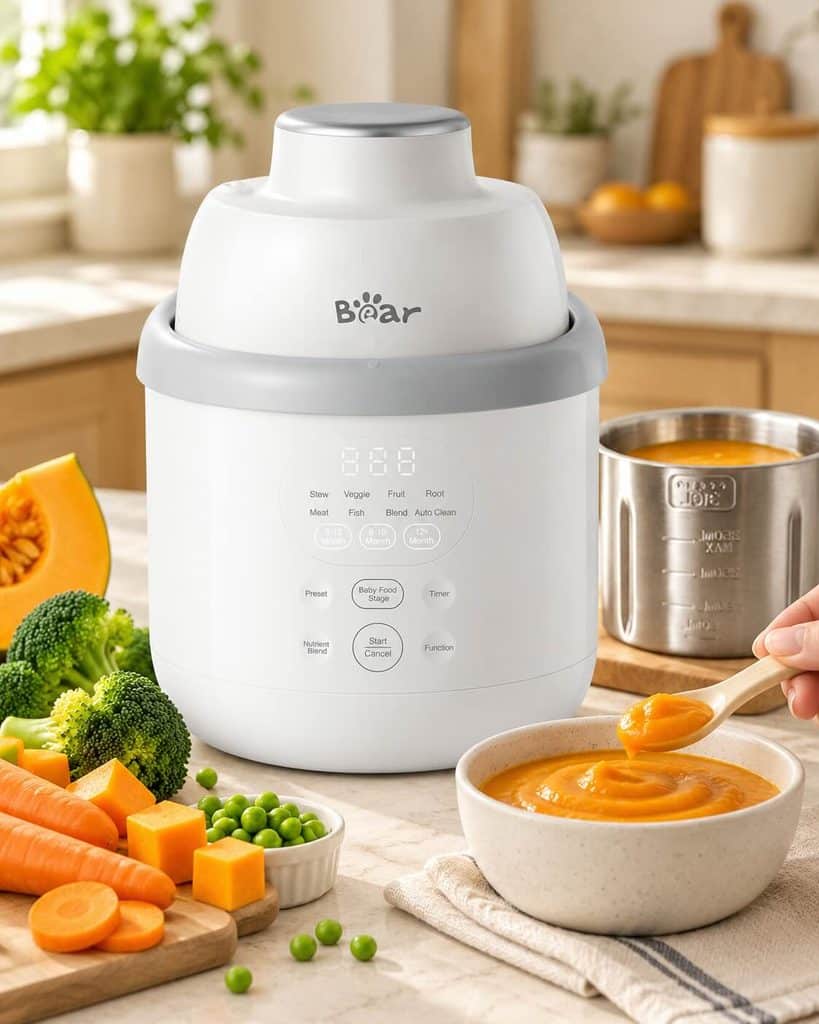
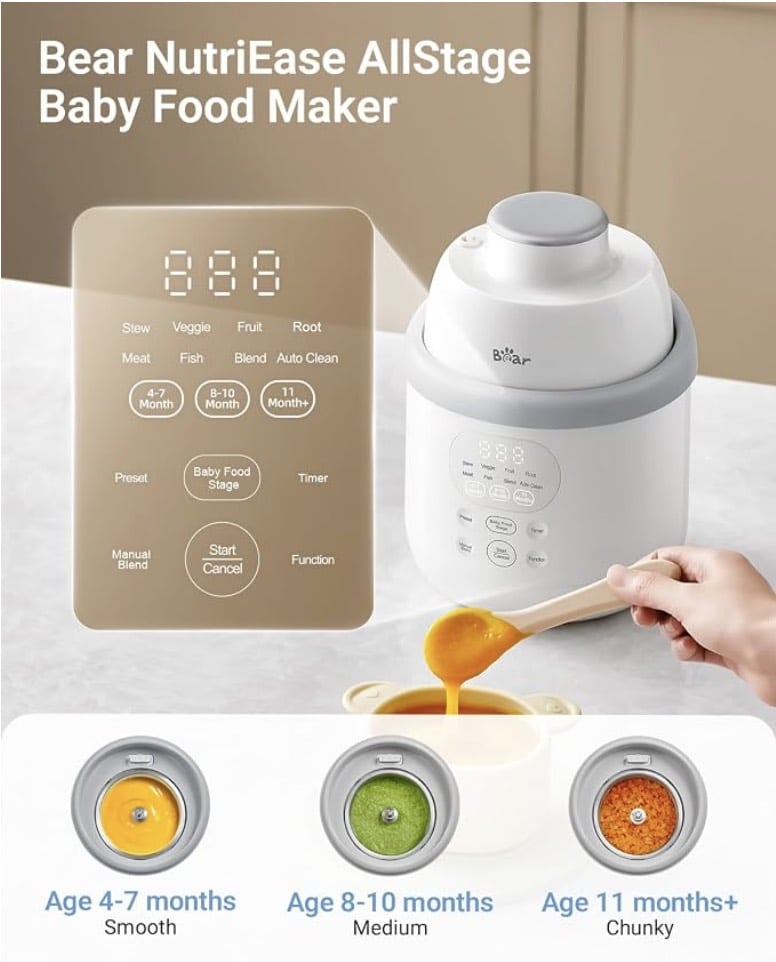
A Bear Baby Food Maker combines heating and blending functions in one appliance. The Bear Baby Food Maker has a 350mL capacity, seven menu options, three texture modes, a timer, pulse function, preset programmes, and auto-cleaning support.
| Daily Need | Standard Blender | Bear Baby Food Maker |
|---|---|---|
| Blend cooked fruit or vegetables | Yes | Yes |
| Heat and blend in one workflow | Usually no | Yes |
| Make small daily portions | Possible, depending on the cup size | Designed for 350mL small batches |
| Adjust texture as needs change | Manual control only | Three preset texture modes |
| Automatic cleaning support | Depends on the model | Available |
| Use beyond baby food | Soups, sauces, smoothies | Primarily baby food preparation |
A blender is a flexible general kitchen tool. A dedicated baby food maker is better suited to parents who want a repeatable process for frequent, small-batch preparation.
Why a Bear Baby Food Maker Suits Changing Textures
Babies do not need the same texture forever. Smooth purées can be useful at an early stage, while mashed and more textured foods become important as children are ready to develop chewing and swallowing skills.
The Bear Baby Food Maker includes three texture settings: ultra-fine purée, transitional textured food, and chunkier bites. These settings help parents adjust preparation without needing to guess how long to blend every time.
The appliance settings are a convenience feature, not a medical feeding recommendation. Always adjust texture, ingredients, and portion sizes to your child’s individual readiness, and follow local healthcare guidance. The NHS guidance on introducing solid foods advises gradually moving from blended foods towards mashed and finger-food textures when a baby is ready.
What Can You Prepare With the Bear Baby Food Maker?
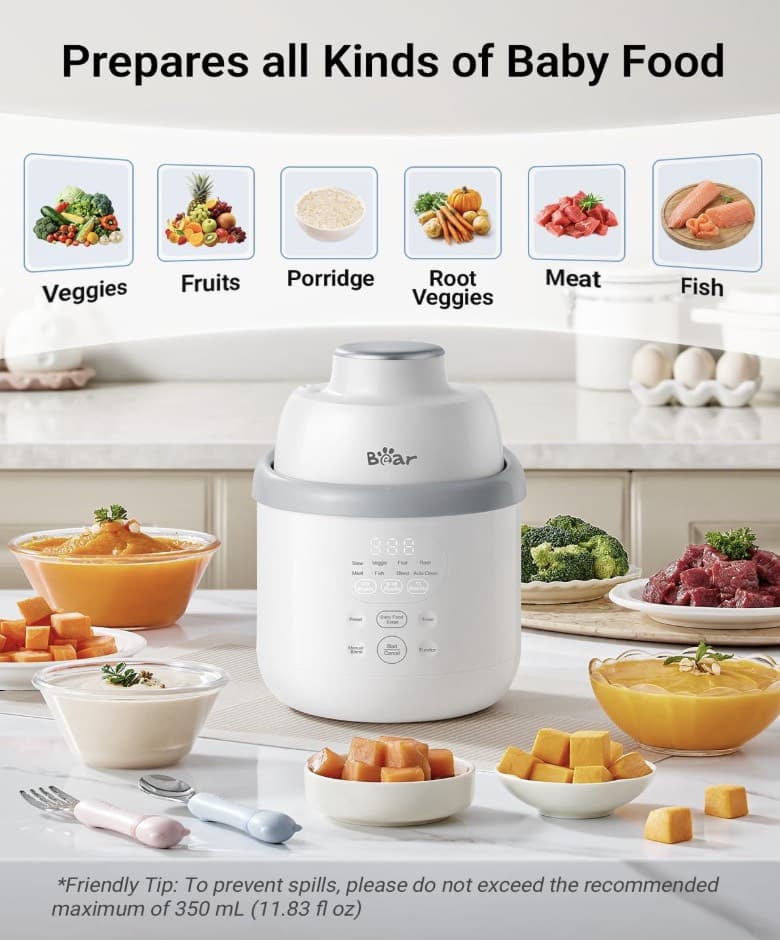
A Bear Baby Food Maker is not limited to fruit purée. With suitable preparation, it can support small portions of vegetables, fruit, porridge, root vegetables, cooked meat, and fish.
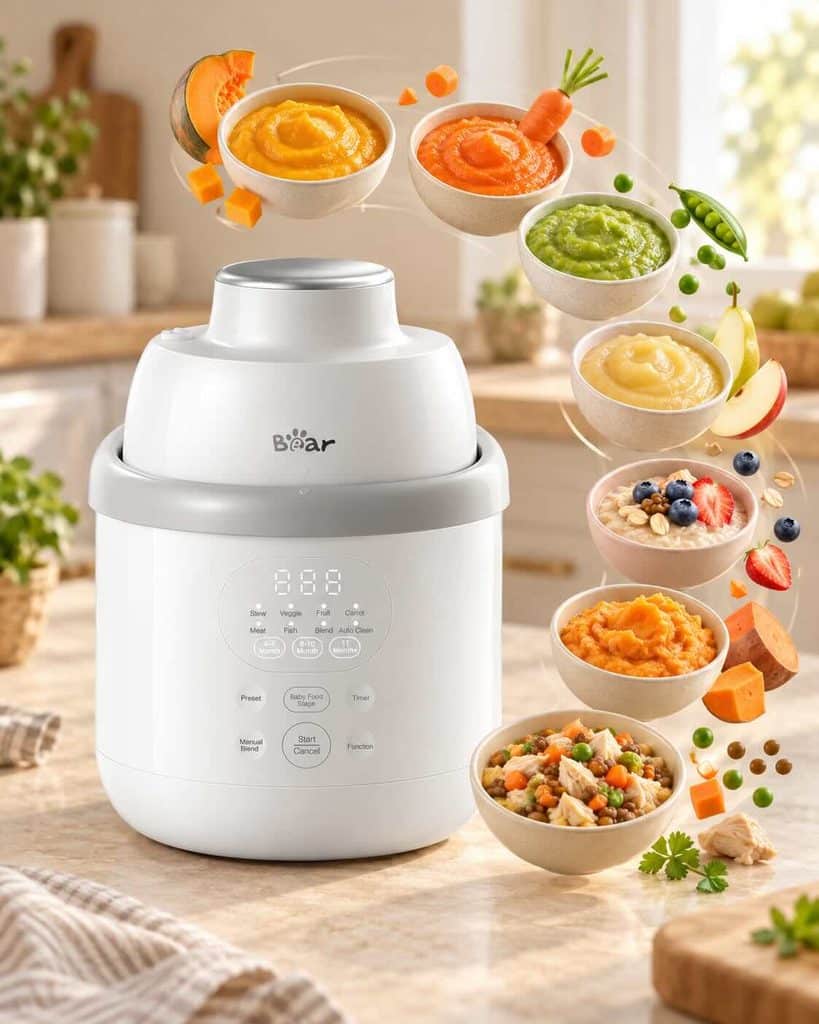
For example, parents may prepare:
- Smooth pumpkin, carrot, pea, pear, or apple purée
- Oat or rice porridge with fruit
- Soft blended root vegetables
- Cooked chicken, fish, lentils, or vegetable combinations
- Thicker mashed meals as texture needs change
The 350mL capacity is useful when you prefer to make fresh servings instead of filling a large blender jug. It can also help reduce leftover food when a child is still eating small portions.
For families that want a general-purpose blending tool alongside a dedicated baby-food appliance, the Bear 4 in 1 Hand Blender is suitable for soups, sauces, smoothies, and larger household cooking tasks.
Retailers, distributors, and buyers developing a baby-care range can contact Bear to discuss baby food preparation products suitable for their market.
When Is a Blender Enough?
A blender remains a good choice when you already cook family meals and only occasionally make purée. It is also useful when you need to blend a larger quantity of soup, sauce, or smoothie.
Choose a blender when you:
- Already cook ingredients separately
- Want one appliance for many household recipes
- Usually make larger portions
- Prefer manual control over blending time and consistency
- Do not need dedicated heating or preset functions
Choose a Bear Baby Food Maker when you:
- Prepare baby food several times each week
- Prefer smaller, fresh portions
- Want heating and blending in one routine
- Need an easier way to move from smooth to more textured food
- Value preset programmes and auto-cleaning support
For more ingredient and meal-preparation ideas, read our guide on how to make homemade baby food.
FAQ: Bear Baby Food Maker vs Blender
Is a Bear Baby Food Maker better than a blender?
It depends on how often you prepare baby food. A blender is enough for occasional purées made from already cooked ingredients. A Bear Baby Food Maker is better suited to regular small-batch preparation because it combines heating, blending, texture settings, and cleaning support.
Can I make fruit, vegetables, porridge, meat, and fish in a baby food maker?
Yes, provided ingredients are prepared and cooked appropriately before serving. A baby food maker can help process fruit, vegetables, porridge, root vegetables, and suitable cooked protein ingredients into a texture that fits your child’s needs.
Is a baby food maker the same as a food processor?
No. A food processor is mainly designed for chopping, slicing, mixing, and handling larger quantities. A baby food maker is more focused on smaller portions, heating, blending, and texture progression.
Can you puree in a food processor?
Yes. A food processor can make purée, particularly for larger batches. However, it may not process very small portions evenly, and it does not necessarily include heating, texture presets, or baby-food-specific functions.
How should homemade baby food be stored?
Use clean containers, cool food promptly, and follow safe refrigeration or freezing guidance. FoodSafety.gov advises that freshly made homemade baby food should generally be refrigerated for one to two days or frozen according to its storage guidance. Review the full FoodSafety.gov baby food storage guidance before storing or reheating food.

One Response