
Table of Contents
Noticed white flakes at the bottom of your kettle or floating in your morning tea? If you live in a hard-water area, you’ve probably seen this before.
Learning how to clean kettle with vinegar is a simple way to tackle limescale without buying a specialist cleaning product. With some white vinegar, water and a little patience, you can remove mineral deposits and get your kettle ready for your next cup of tea.
The important part is knowing how much vinegar to use, how long to leave it and how to rinse everything out properly.
Why Vinegar Works for Kettle Limescale
That chalky white layer inside your electric kettle is called limescale. It develops when minerals in hard water, particularly calcium and magnesium, leave deposits behind during heating.
Over time, these deposits can collect around the heating surface, affect boiling performance and leave unwanted flakes in your tea or coffee.
White vinegar contains acetic acid, which helps dissolve the mineral deposits. It’s an inexpensive option for descaling, provided your kettle manufacturer allows it.
The UK consumer organisation Which? also recommends diluted white vinegar as one way to remove limescale from a kettle.
Remember that descaling removes mineral buildup. It isn’t the same as disinfecting your kettle.
How to Clean Kettle with Vinegar: 6 Easy Steps
You don’t need much to get started:
- Plain white vinegar (not flavoured or balsamic vinegar)
- Fresh water
- A soft sponge or non-abrasive cloth
- A clean, dry cloth
Before starting, check your kettle’s care instructions. The method below is suitable for models whose manufacturers permit vinegar descaling. Some kettles require a different concentration, soaking procedure or dedicated descaling product.
Step 1: Unplug and Empty the Kettle
Switch off your electric kettle, unplug it and allow it to cool completely.
Pour away any remaining water and check the inside. You may notice white deposits around the bottom, small mineral flakes or a cloudy coating along the inner walls.
If your kettle has a removable limescale filter, check the manual before taking it out for cleaning.
Step 2: Prepare the Vinegar Solution
For kettles that allow this method, a common approach is to mix equal parts white vinegar and water.
You generally only need enough solution to cover the affected area, often around half the kettle’s capacity. Always stay within the minimum and maximum fill levels required by your model.
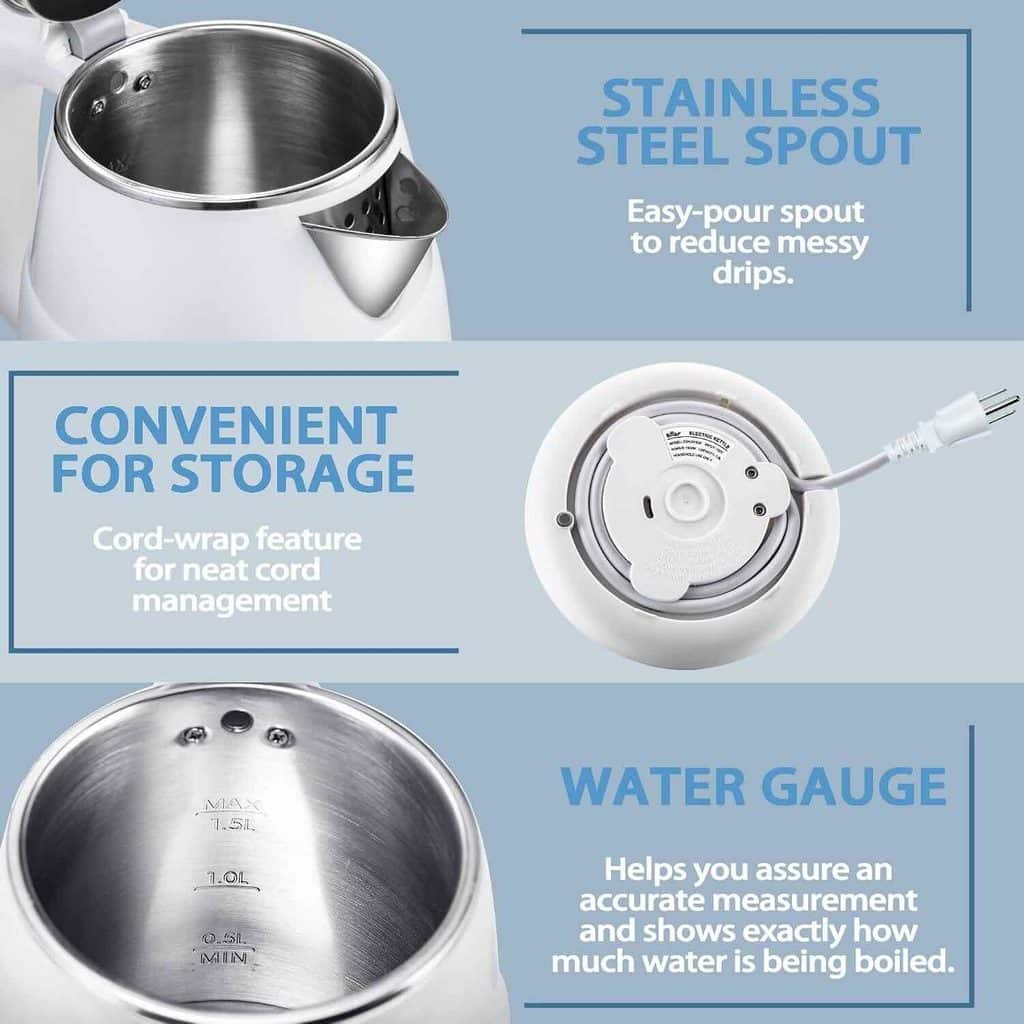
Accurate filling is especially useful when you’re cleaning a kettle rather than simply boiling water. Some Bear electric kettles have clearly marked water levels inside the pot, making it easier to measure the amount you need.
For example, the 1.5L design includes markings at 0.5L, 1.0L and 1.5L, so there’s less guesswork when preparing the mixture.
Step 3: Let the Vinegar Do Its Work
If your kettle’s instructions allow the vinegar solution to be boiled, heat it according to those directions. Allow the kettle to switch off, then unplug it and leave the solution to stand for around 20–30 minutes.
Some manufacturers recommend a longer soaking period, while others instruct users to add vinegar after boiling plain water. Always follow the method approved for your specific kettle.
If boiling vinegar isn’t recommended, don’t do it. Use the approved soaking method or descaler instead.
Keep the kitchen ventilated, as vinegar can produce a strong smell when heated.
Step 4: Gently Remove the Loosened Limescale
Once the solution has cooled completely, pour it away and inspect the inside.
Most light mineral deposits should loosen without much effort. For any remaining patches, use a soft sponge or cloth rather than scraping them with a knife or steel wool.
This is especially important for stainless steel electric kettles, where abrasive cleaning tools may scratch the surface.
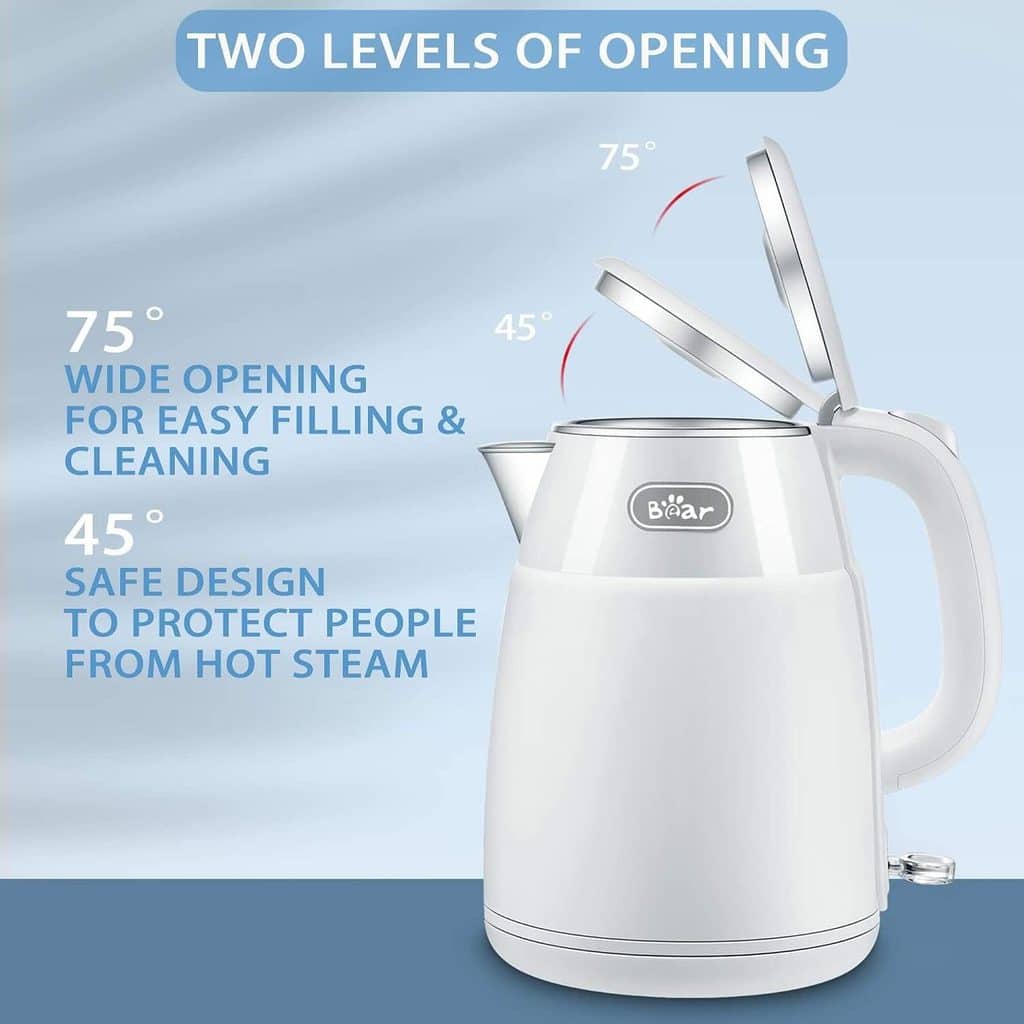
A wide-opening lid can make this part much easier. Some Bear kettles feature a two-stage lid that opens to approximately 45° or 75°. The wider position gives you more room to reach inside when wiping the inner walls.
Make sure the kettle has fully cooled before opening the lid wide or reaching inside.
Step 5: Rinse Thoroughly with Fresh Water
A clean-looking kettle isn’t quite ready for tea if it still smells of vinegar.
Rinse the interior several times with fresh water. Then fill it with clean water to an appropriate level, boil and discard that water.
Repeat once or twice if necessary until the vinegar smell has disappeared.
Don’t use the rinse water for drinking, tea or coffee.
Step 6: Clean the Spout and Exterior
While you’re cleaning the kettle, don’t forget the areas you touch and use every day.
Gently wipe around the spout, lid and handle with a soft, slightly damp cloth. If the kettle has a stainless steel spout, pay attention to the opening where mineral residue may collect.
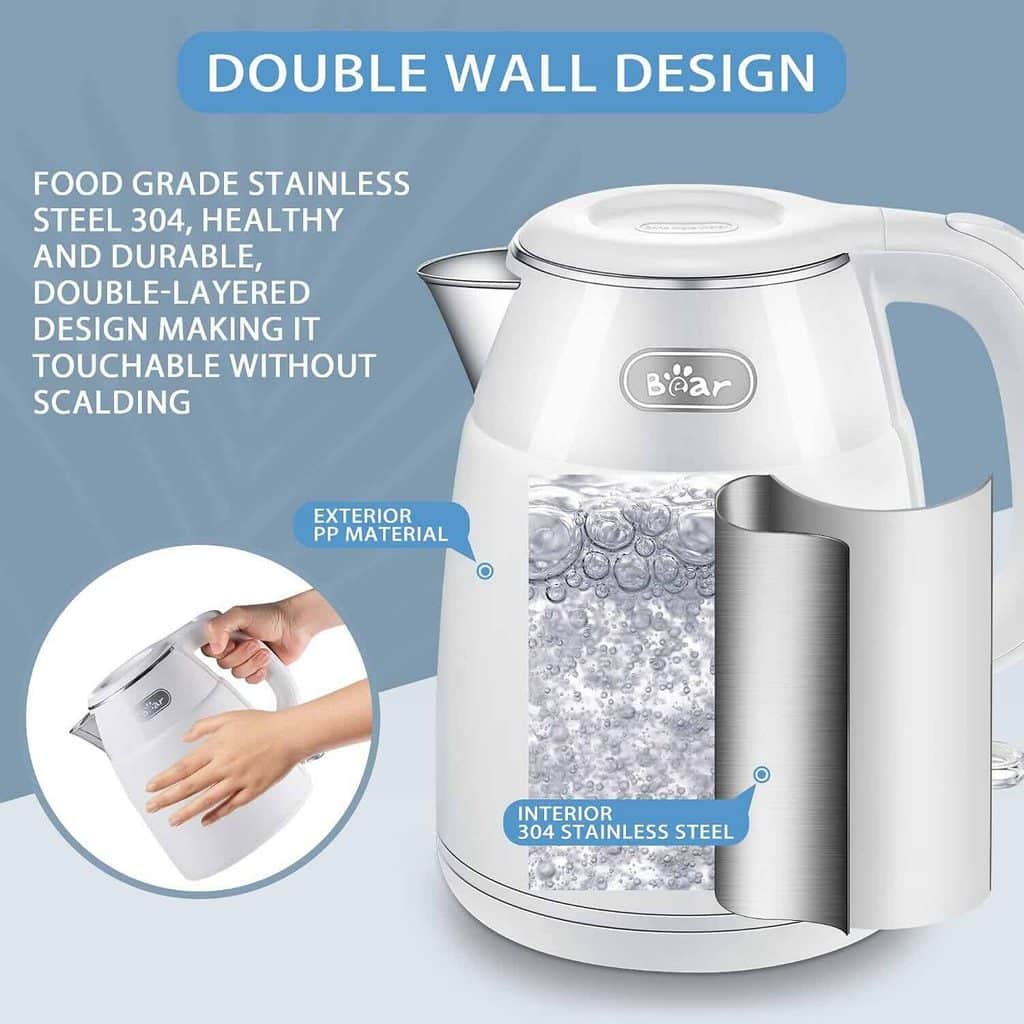
For a double-wall kettle, the outer surface can usually be wiped clean without much effort. However, you should still allow it to cool before cleaning.
Never immerse the kettle, electrical base, plug or cord in water. Keep the electrical connections dry and allow all surfaces to dry before using it again.
How to Clean Kettle with Vinegar When Limescale Remains
Sometimes one cleaning cycle isn’t enough, particularly if the kettle hasn’t been descaled for several months.
If you still notice a chalky coating after the first attempt, don’t immediately reach for a rough scrubbing brush.
For models that permit vinegar descaling, repeating the approved treatment can help loosen stubborn deposits. Give the solution time to work, then rinse thoroughly.
If the kettle still smells of vinegar, additional rinsing and a fresh-water boiling cycle are usually more helpful than adding another cleaning ingredient.
You may also come across recommendations for lemon juice or citric acid. These are alternative descaling ingredients, but they should only be used if your kettle manufacturer permits them.
Never mix vinegar with bleach or other household cleaning chemicals. As the CDC’s cleaning safety guidance explains, mixing cleaning chemicals can release dangerous vapours.
If the marks remain after repeated cleaning, or the heating surface looks damaged or corroded, stop scrubbing and consult the manufacturer’s instructions.
Simple Habits That Keep Your Kettle Cleaner
Regular care makes descaling less of a chore, particularly if you use your kettle several times a day.
Don’t Leave Water Sitting for Days
After making your morning tea or coffee, empty any leftover water that you don’t plan to use.
Leaving water in the kettle for long periods gives minerals more opportunities to settle. Emptying it regularly can help reduce visible deposits.
Pay Attention to Water Hardness
If you live somewhere with hard water, you may need to descale your kettle more frequently.
A monthly check is a useful starting point. Look inside for white deposits and adjust your cleaning routine according to how quickly they return.
Using filtered water may also help reduce mineral buildup, depending on the type of filter.
Choose a Kettle That’s Easy to Maintain
When using a kettle every day, small design details can make a noticeable difference.
A stainless steel interior is straightforward to inspect, while a wide lid opening gives you better access when cleaning. Visible water-level markings can also help you fill the kettle accurately instead of using more water than necessary.
If you’re comparing different designs, Bear offers an electric kettle with adjustable temperature settings, as well as an electric coffee kettle designed for more controlled pouring.
Each model has its own construction and care requirements, so always check the relevant instructions before descaling.
For retailers and distributors selecting products for their range, ease of cleaning, practical capacity and everyday usability are worth considering alongside power and appearance. You can explore Bear’s coffee and tea appliance collection or contact our team to discuss available models.
Frequently Asked Questions
How often should I clean my electric kettle with vinegar?
It depends on how frequently you use it and how hard your water is.
In areas with hard water, checking for limescale around once a month is a sensible habit. Follow your kettle manufacturer’s recommended descaling schedule and clean it sooner if deposits become noticeable.
Is vinegar safe for a stainless steel electric kettle?
Diluted white vinegar is commonly used to remove limescale from stainless steel kettles, but compatibility depends on the specific appliance.
Check the manufacturer’s instructions before using it, especially if your kettle has special coatings, seals or internal components that require particular care.
Do I have to boil vinegar to clean a kettle?
Not necessarily.
Some manufacturers recommend boiling a diluted vinegar solution, while others advise adding vinegar after heating water or using a soaking method.
Follow the instructions for your specific model rather than assuming every kettle should be cleaned the same way.
How do I remove the vinegar smell after cleaning?
Rinse the kettle thoroughly with fresh water, then boil and discard one or two batches of clean water.
If the smell remains, repeat the rinsing process before using the kettle for drinks.
Can I use vinegar to clean a coffee kettle?
Some coffee kettles can be descaled with vinegar, but their narrow spouts and internal construction may require extra care.
Always check the product manual first. Avoid inserting abrasive tools or forcing a brush into a narrow spout.
A little regular maintenance can make a big difference to your daily tea or coffee routine. With the right cleaning method and a few simple habits, keeping limescale under control doesn’t have to be complicated.

One Response