
Table of Contents
Yogurt maker temperature should match the needs of your starter culture. Before making a batch, check both the culture instructions and your appliance manual. The milk temperature when you add the starter, the temperature during fermentation, and how soon you refrigerate the finished yogurt all affect the result.
What Yogurt Maker Temperature Should You Use?
Start with the temperature recommended for your starter culture, then check that your machine’s program suits it. Different stages of the yogurt making process require different temperatures.
The University of Illinois Extension provides the following temperatures in its basic yogurt recipe. For an electric yogurt maker, follow the appliance instructions and use a compatible starter. University of Illinois Extension’s homemade yogurt guide. extension.illinois.edu
| Stage | Temperature in the Recipe |
|---|---|
| Heating the milk | 180–185°F (82–85°C) |
| Cooling before adding starter | 108–115°F (about 42–46°C) |
| Incubation | 108–115°F (about 42–46°C) |
| Refrigerating the finished yogurt | 40°F (4°C) or below |
Keep the milk-heating stage separate from fermentation. Prepare the milk in a saucepan and use a food thermometer before adding the starter.
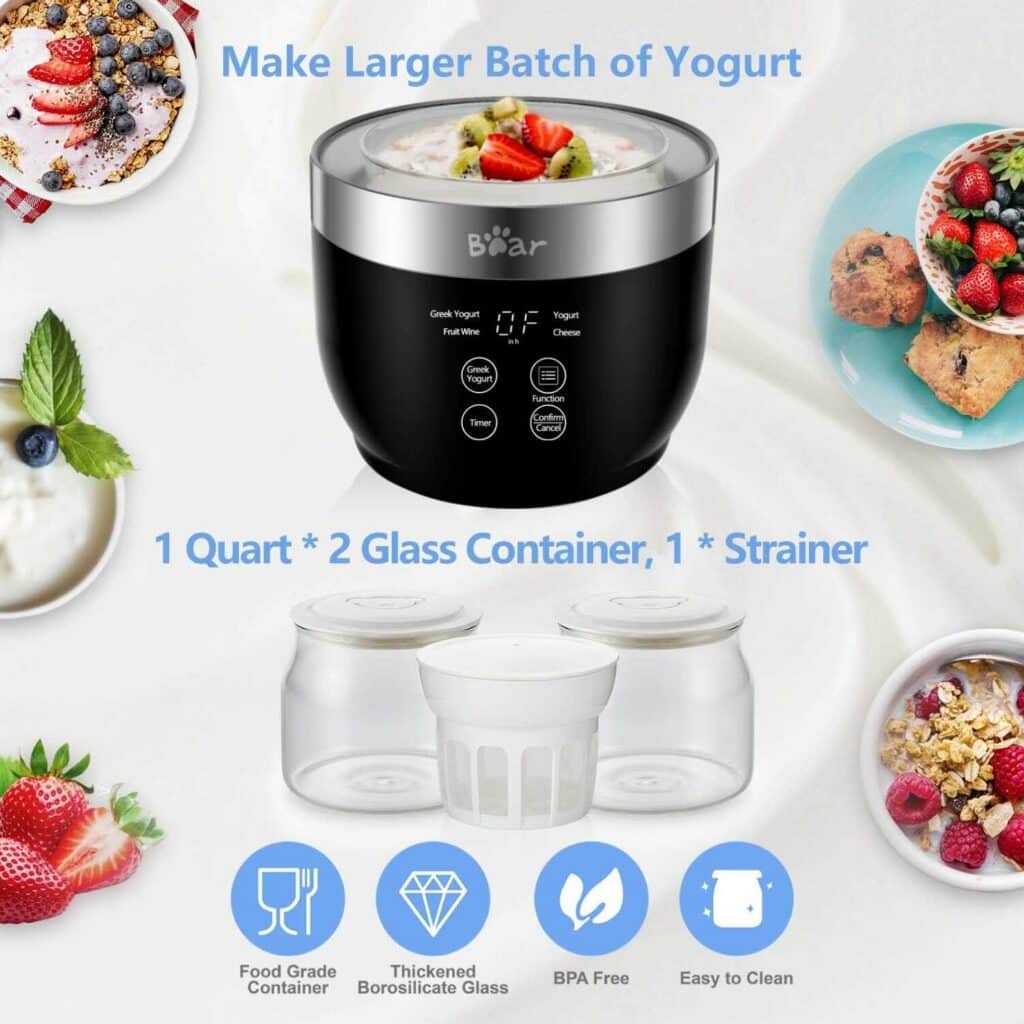
If your machine has a fixed yogurt program, check its preset temperature before choosing a culture. Bear offers dedicated fermentation programs and temperature control for home yogurt making. You can review the available model specifications on the Bear Yoghurt Maker product page.
Yogurt Maker Temperature Checks for Better Results
A few checks before starting can help you avoid repeating the same problem with your next batch.
Check the Milk Before Adding Starter
Use pasteurized milk and a fresh starter containing live cultures. Measure the milk temperature with a food thermometer and add the culture at the temperature its instructions specify.
Follow the recommended starter quantity, too. Measuring both the milk and starter makes it easier to repeat a successful batch.
Select the Right Program
The Bear model shown has separate Yogurt and Greek Yogurt programs, along with a timer. Select the program that matches your recipe and check the recommended incubation time before starting.
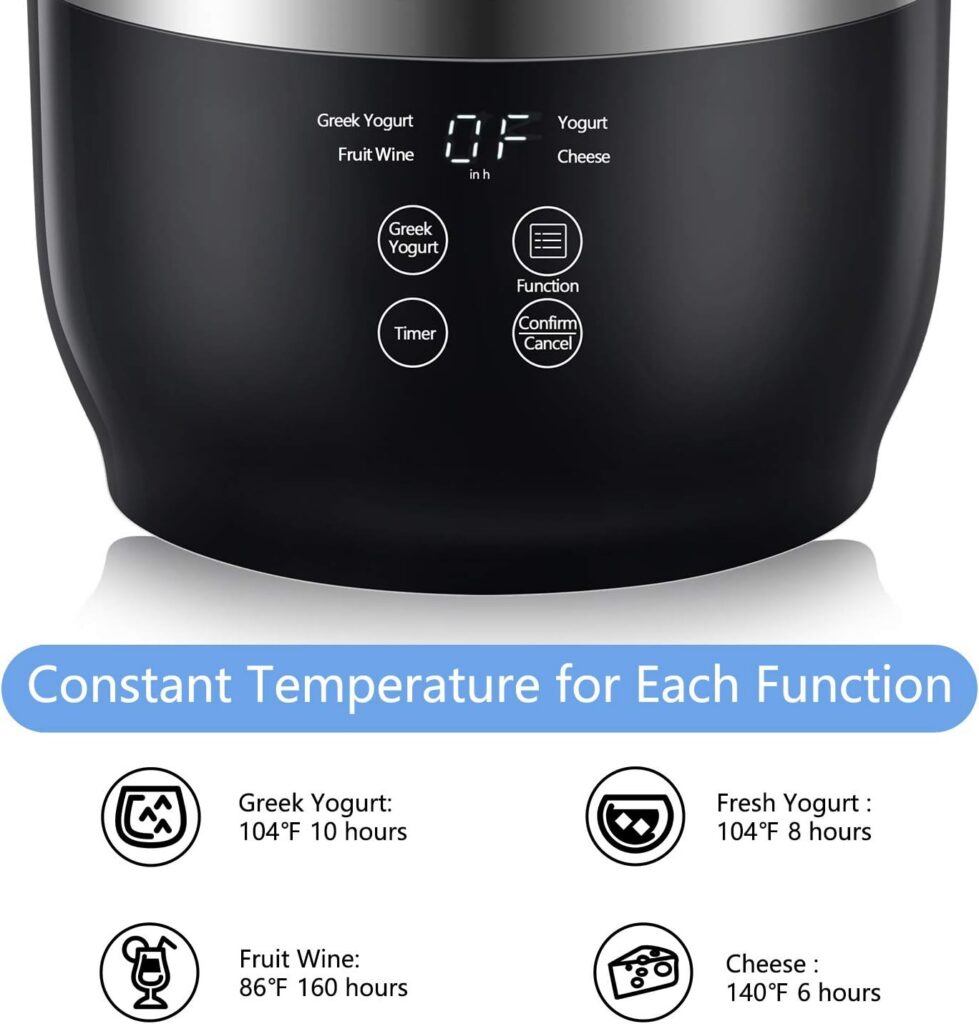
Temperature control manages the fermentation environment while the timer tracks the cycle. Keep the jar covered and leave it undisturbed during incubation.
Use the Glass Jar Correctly
The model shown comes with two lidded glass jars. Mix the ingredients in a clean container, transfer the mixture into one jar, and put on its lid before placing it in the machine.
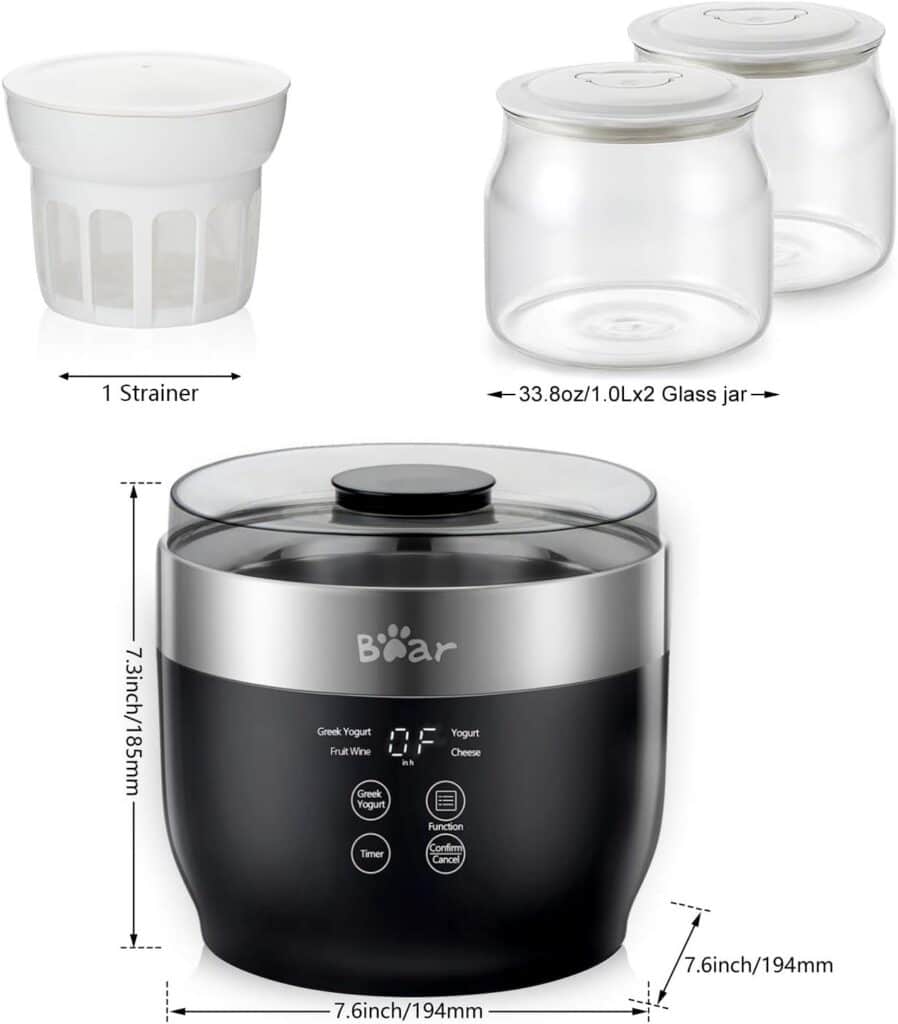
For this model, the milk mixture goes into the glass jar. Keep the heating chamber dry during setup and follow the manual for positioning the jar and appliance cover.
Refrigerate Once the Yogurt Has Set
Refrigerate the finished yogurt promptly. The removable glass jar lets you move the batch from the machine to the refrigerator in the same container.
For a thicker Greek-style texture, use the included strainer to drain some whey from the chilled yogurt. Keep it covered in the refrigerator while straining.
Why Is Your Homemade Yogurt Runny or Too Sour?
Temperature is one thing to check, along with starter freshness, cleanliness, and incubation time.
| Problem | What to Check Next Time |
|---|---|
| Yogurt fails to set | Check for live cultures, the correct temperature, and clean equipment. Discard a batch that fails to set properly. |
| Set yogurt is thinner than preferred | Chill it first, then strain it in the refrigerator for a thicker texture. |
| Yogurt is too tart | Review incubation time and refrigerate promptly once set. |
| Noticeable whey separation | Check whether incubation ran too long or the jar was moved while setting. |
Keep a short note of your milk, starter quantity, program, and incubation time. Once you get a result you like, those details make the next batch easier to repeat.
Frequently Asked Questions
Does Greek Yogurt Need a Higher Temperature Than Regular Yogurt?
Check your model’s programs and the starter directions. A Greek Yogurt setting may use a different incubation time rather than a higher temperature. Straining the chilled yogurt removes whey and creates a thicker consistency.
Should I Add Water to the Heating Chamber?
For the Bear model shown, keep the heating chamber dry and place the milk mixture in the glass jar. Check the instructions for your exact model before setup.
How to Clean a Yogurt Maker After Each Batch?
Unplug the appliance and let it cool. Remove the glass jar, lid, and strainer, then clean them according to the manual. Follow the instructions for wiping the heating chamber and keep the electric base out of water.
Where Can I Find Bear Yogurt Maker Instructions?
Find the model number on your appliance or packaging and use the matching manual. If you need a copy, provide that number when you contact Bear for product support.
For retailers and distributors comparing products, explore the Bear breakfast appliance range and get the latest product brochure from the Bear Download Center. Review the programs, containers, and accessories for each model when planning your range.