
Table of Contents
Electric steamer vs rice cooker is a common question, because both heat water and make steam and can look like the same appliance. They are not. A steamer cooks food over hot steam in stacked trays, while a rice cooker heats a bowl of rice and water, then stops by itself.
This guide compares the two on cooking style, capacity, convenience and cleaning. It also looks at rice cookers with a steamer tray and helps you decide which one fits your kitchen. Bear makes both, so the comparison is meant to be fair to each.
Electric Steamer vs Rice Cooker: The Main Differences
The quickest way to choose is to look at what you cook most often. Before comparing details, it helps to understand what each appliance is designed to do.
What an Electric Steamer Does
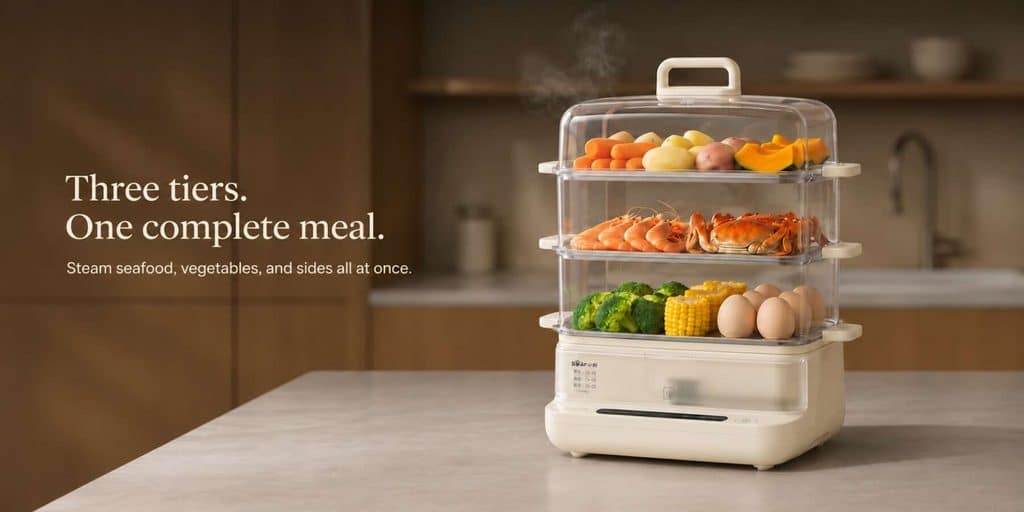
An electric steamer has a water base that heats up and turns water into steam. The steam rises through one or more trays, and the food cooks in that hot, moist air. Because the food sits above the water, it never touches it.
This makes a steamer a good fit for foods that cook best gently: vegetables, fish, dumplings, buns and eggs. Many people also like it because it needs no added oil, and it can warm up leftovers without drying them out.
What a Rice Cooker Does

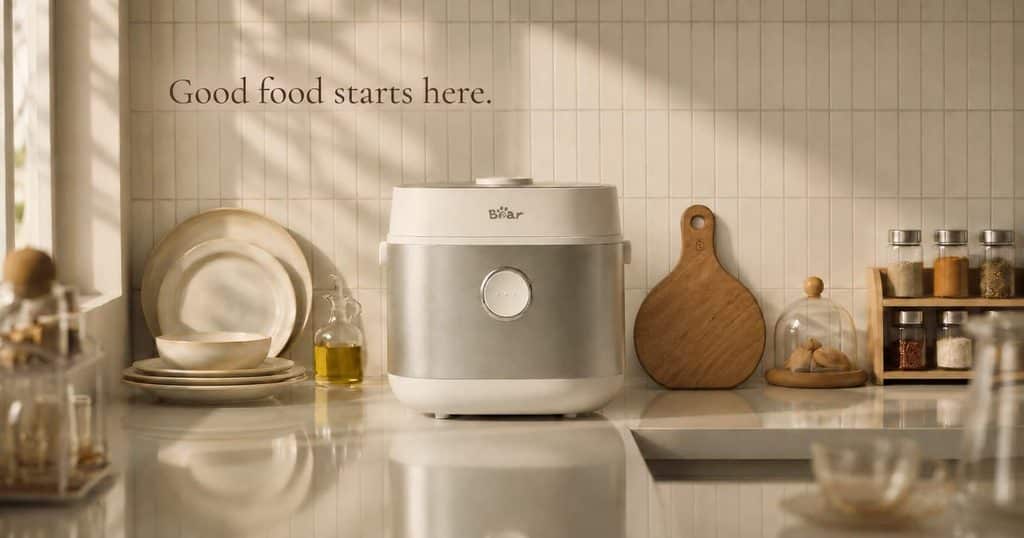
A rice cooker works differently. You add rice and measured water to an inner bowl, close the lid and press a button. The cooker heats until the water is absorbed, then switches off or moves to a keep-warm setting by itself.
That hands-off approach is the main reason people love rice cookers. You do not need to watch the pot or time it. Many models also cook porridge, soup and other grains, and some include a steamer tray. If you want a step-by-step walkthrough, read our guide on how to use a rice cooker.
Side by Side: How the Two Compare
Here is how the two appliances differ in everyday use.
- Main job. A steamer is made for vegetables, fish, dumplings, buns and eggs. A rice cooker is made for rice and other grains, and many models also handle porridge and soup.
- How it cooks. A steamer boils water in its base, and steam rises through the trays, so food never sits in the water. A rice cooker cooks rice in measured water until it is absorbed.
- Capacity. Stackable trays let a steamer cook several foods at once, such as vegetables on top and fish below. A rice cooker has one bowl, so it usually cooks one batch at a time.
- Controls. Steamers usually rely on a timer you set for each food. Most rice cookers are one-touch and switch off or move to keep-warm when the rice is done.
- Keep warm. Both can hold food warm. In a steamer, this works only while there is enough water left in the base, so check the water level.
- Cleaning. A steamer has more parts, including trays and a water base that needs descaling. A rice cooker has an inner bowl, a lid and a steam vent to wash.
Can You Steam in a Rice Cooker?
Often, yes. A rice cooker with steamer tray is common, and the tray sits above the rice, so you can steam vegetables or dumplings while the rice cooks. It suits a small meal for one or two people.
A single tray holds less than stacked steamer trays, so it is less practical for a family dinner. If you are unsure how to use a rice steamer tray, check your manual for which foods it can handle and how much water the pot needs.
Can an Electric Steamer Cook Rice?
Some steamers include a bowl for rice, which lets you cook rice and steam other foods in one go. This works, but rice cookers are built around rice, so they usually give you more control and a simpler process. If rice is on your table every day, a rice cooker is the easier choice.
Features Worth Comparing
Once you know which type you need, a few features can make daily use easier. These are the ones to look at.
- Number of trays. More trays mean more food at once, but they also take more counter and cupboard space.
- Timer. A simple dial works for basic jobs. A digital timer or delayed start is handy if you want dinner ready when you get home.
- Water level window. A visible gauge lets you see when to top up without lifting hot trays.
- Keep-warm setting. Useful when family members eat at different times.
- Removable parts. Trays and bowls that lift out are easier to wash and dry.
Which One Should You Choose?
There is no single right answer, because the best appliance depends on how you cook. Use the lists below as a starting point, then look at the examples that follow.
Choose a rice cooker if:
- You eat rice or grains several times a week.
- You want to add ingredients and walk away.
- You cook for one to four people, or have limited counter space.
Choose an electric steamer if:
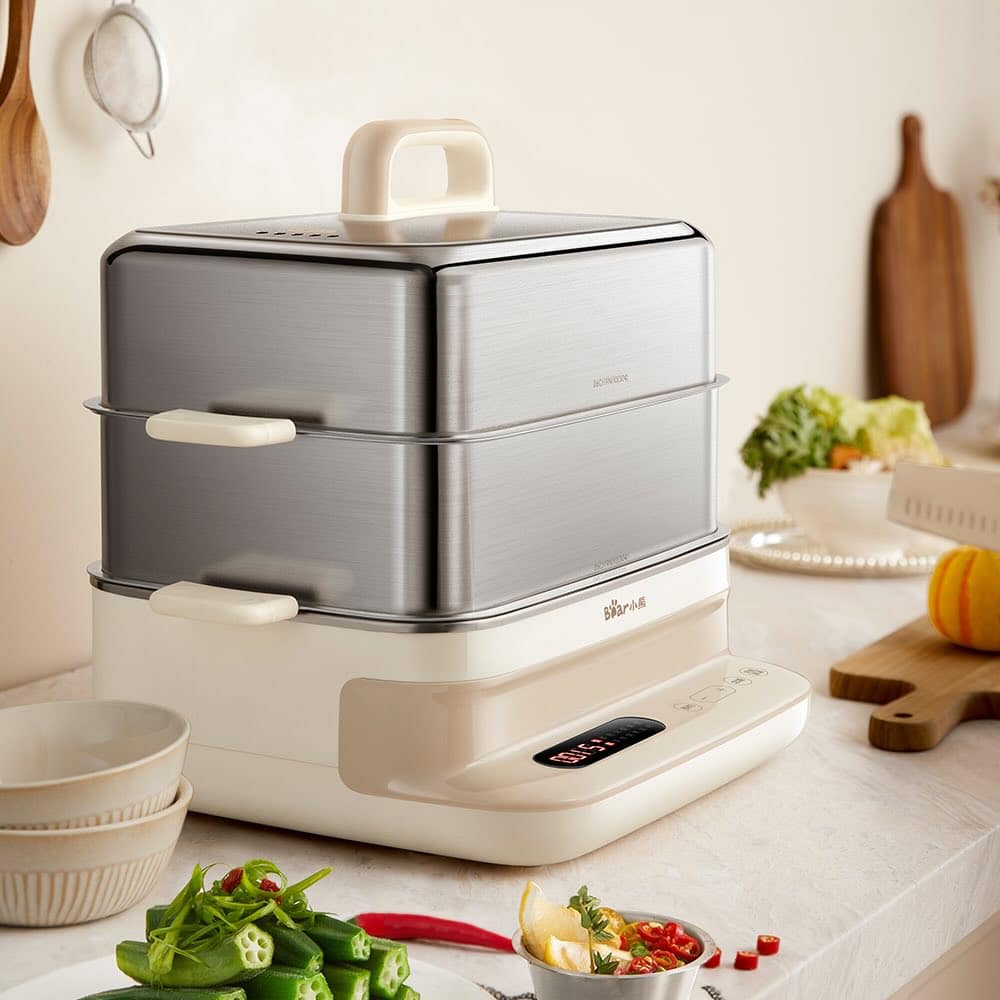
- You steam vegetables, fish, dumplings or buns often.
- You want to cook two or three foods at the same time.
- You prefer cooking without added oil.
Choose both if you cook a full meal most evenings. The rice cooker handles the rice while the steamer handles everything else.
For Singles and Couples
If you cook small portions, a rice cooker with a steamer tray is often enough. You can cook rice below and steam a piece of fish or a handful of vegetables above, with one appliance to wash afterwards.
For Families
Families usually cook more food and more kinds of food. A steamer with several trays lets you cook vegetables, dumplings and protein together, while a rice cooker takes care of the rice. Having both can cut down on stovetop cooking on busy evenings.
For Small Kitchens
Space matters if your counter is crowded. A rice cooker with a steamer tray gives you two jobs in one footprint. If you choose a separate steamer, look for one with trays that stack or nest for storage.
For Meal Prep
If you prepare meals for the week, a steamer is useful for cooking vegetables and protein in batches. A rice cooker covers the grain. Both have a keep-warm setting, which helps if you want food ready at a set time.
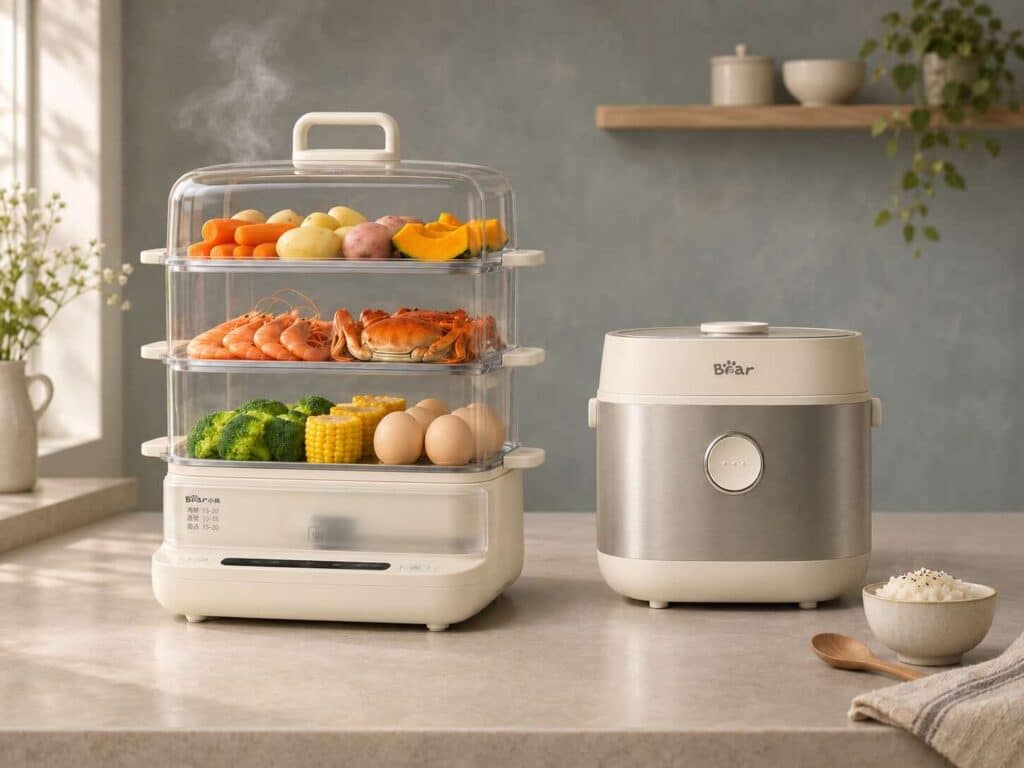
If you lean toward steaming, take a look at the Bear electric steamer. If rice comes first, see the Bear rice cooker.
Want to see more cooking appliances for everyday dinners? Browse the Bear Dinner Series.
Food Safety and Cleaning Tips
Both appliances are simple to look after, but a few habits keep your food safe and your appliance working well for longer.
Cooked Rice
Food Standards Scotland advises chilling cooked rice as quickly as possible, ideally within an hour, and taking it out of the cooker first. Refrigerate it once it cools, eat it within 24 hours, and reheat it until it is steaming hot all the way through, only once.
The reason is that uncooked rice can carry bacteria spores that survive cooking. The longer cooked rice sits at room temperature, the more likely they are to cause trouble. Our guide on how long cooked rice lasts in the fridge covers storage in more detail.
Steamer Care
Empty the water base after each use and let the trays dry. Descale the base when mineral build-up appears, following your manual. Check the water level before and during long cooking sessions, because a steamer needs enough water to keep making steam.
When you lift the lid or trays, tilt them away from you. Steam can be very hot, and it escapes quickly.
Rice Cooker Care
Wash the inner bowl after each use and wipe the lid and steam vent. Keep the water between the marked lines, and use the tools your manual recommends so the bowl coating lasts. Let the bowl cool before washing it.
Never let water run into the base of the cooker. Wipe the outside with a damp cloth and keep the heating plate clean and dry.
For Retailers & Distributors: Why Shoppers Compare These Two
Shoppers often ask whether they need a steamer, a rice cooker or both. This question comes up in stores and in online search, and clear answers help customers decide with confidence.
Stores that explain the difference clearly tend to make buying easier. Placing the two side by side, with a short note on what each does best, helps customers choose. It also gives you a natural way to suggest a second appliance later.
A rice cooker with a steamer tray can also be a simple starting point for shoppers who want one appliance to do two jobs. If you are planning a cooking range for your market, you can contact our team to ask about stocking Bear’s cooking appliances.
FAQ
Is an electric steamer healthier than a rice cooker?
Steaming needs no added oil, which some people prefer. How healthy a meal is depends mostly on what you cook, so both appliances can fit a balanced diet.
Can an electric steamer cook rice?
Some steamers include a bowl for rice. If they do not, a rice cooker is usually the easier choice for rice.
Can you steam vegetables in a rice cooker?
Yes, if your rice cooker has a steamer tray or a basket made for it. Check the manual to see how much it can hold and how long to cook each food.
Do I need both a steamer and a rice cooker?
Most households do not. If you cook rice daily, start with a rice cooker. If you mainly steam vegetables, fish or dumplings, start with a steamer.
Which one is easier to clean?
A rice cooker usually has fewer parts. A steamer has more trays, but removable parts are easy to rinse. Check which parts are dishwasher-safe for your model.
Can I keep food warm in a steamer?
Many steamers have a keep-warm setting, but it needs enough water left in the base. Check the water level and follow your manual.