
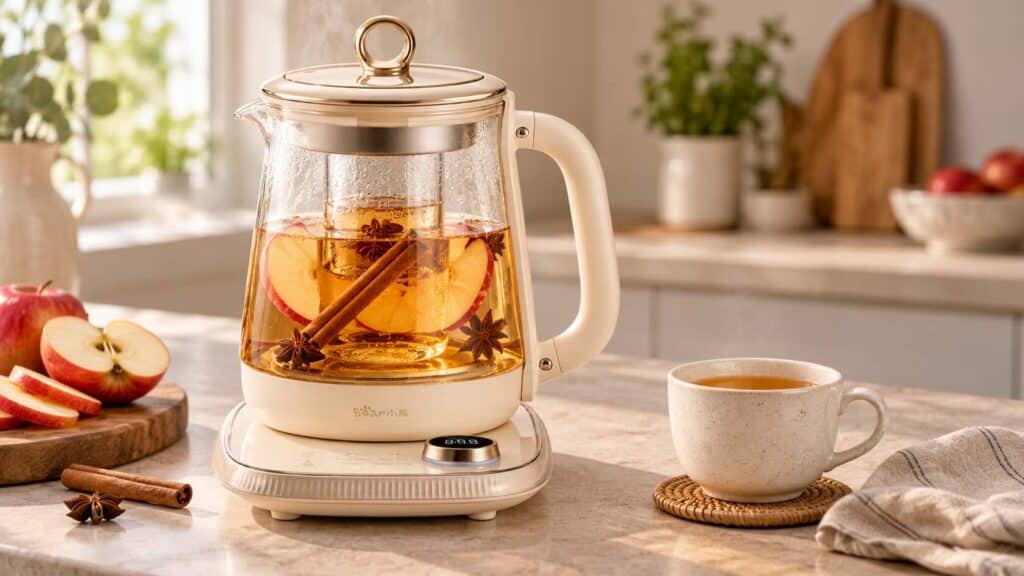
Waiting for water to boil seems simple, but the process inside an electric kettle involves controlled electrical heating, heat transfer, and temperature sensing. How does an electric kettle work? It sends electrical energy from the power base to a heating element, which transfers heat into the water until the selected temperature or boiling point is reached.
For a quick cup of tea, a standard kettle is often enough. But if you need controlled temperatures, scheduled heating, or gentle cooking functions, it is important to understand where a basic kettle ends and a multi-function appliance begins.
How Does an Electric Kettle Work? Electricity Becomes Heat
An electric kettle receives power through its cord or cordless base. That power flows to a heating element, usually positioned beneath or inside the base of the kettle.
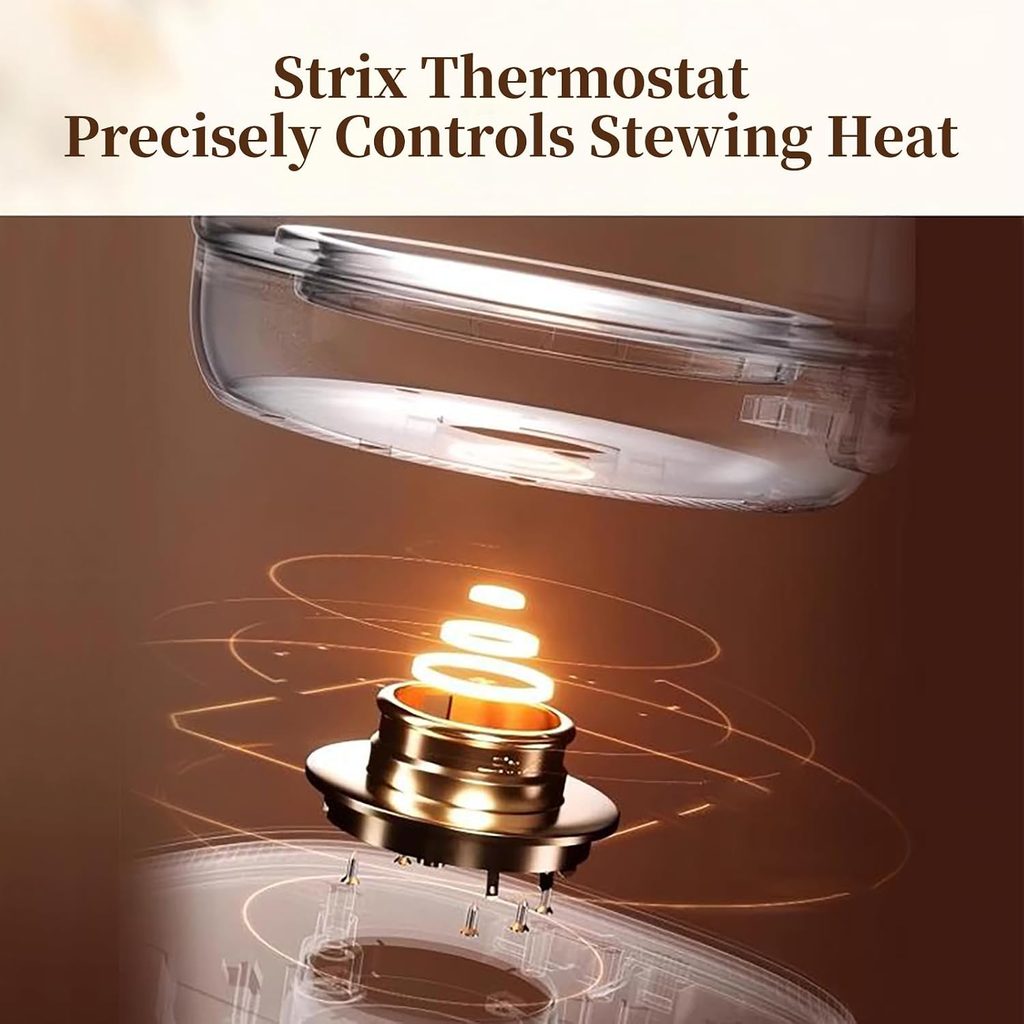
The heating element resists the flow of electricity and becomes hot. Heat then moves from the element into the water. As the water near the base warms, it rises while cooler water moves down, creating circulation that gradually heats the whole kettle.
This is the basic electric kettle working principle: electricity becomes heat, and the heat is transferred efficiently to water in a contained vessel. Fill only to the marked water range so the appliance can heat properly and safely.
For buyers comparing standard boiling products, see Bear’s electric kettle range, including models with adjustable temperature settings and keep-warm functions.
How Does an Electric Kettle Work with Temperature Control?
A basic boil-only kettle generally heats water until it reaches boiling point. As steam and temperature increase, its control system detects that condition and cuts power to the heating element.
The exact sensing method can vary by model. Many modern kettles also include automatic shut-off and boil-dry protection, which helps stop heating when there is too little water. Electrical Safety First recommends choosing products with these protections and following the manufacturer’s instructions for use and cleaning. Read its kettle safety guidance.
Temperature control matters when boiling water is not the only goal. Bear’s current electric kettle product page, for example, lists adjustable temperature control from 40°C to 95°C and a keep-warm function. These options can make it easier to prepare water for tea, coffee, or other temperature-sensitive drinks.
When Is a Kettle the Wrong Tool for the Job?
A standard kettle is designed primarily for heating water. It is not automatically suitable for milk, soup, grains, or thick liquids unless its instructions specifically state that it can be used for those purposes.
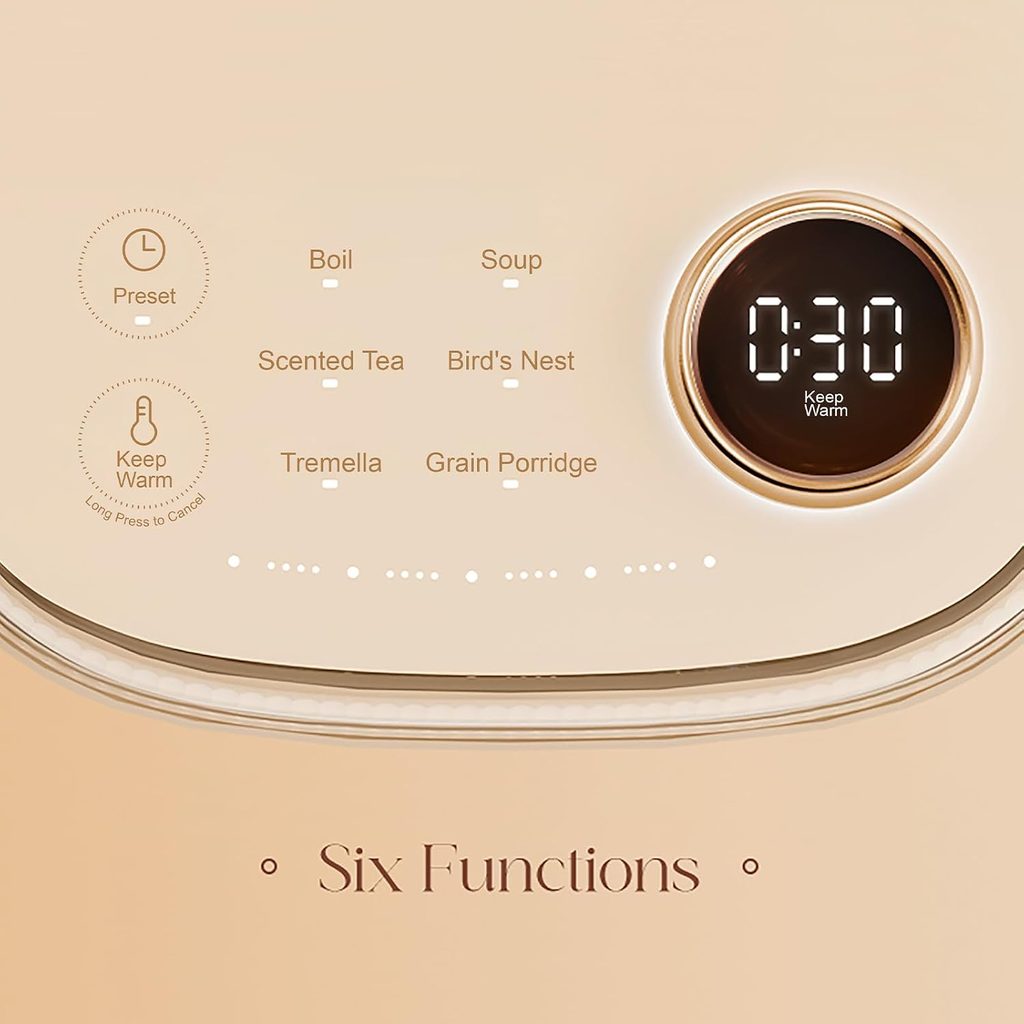
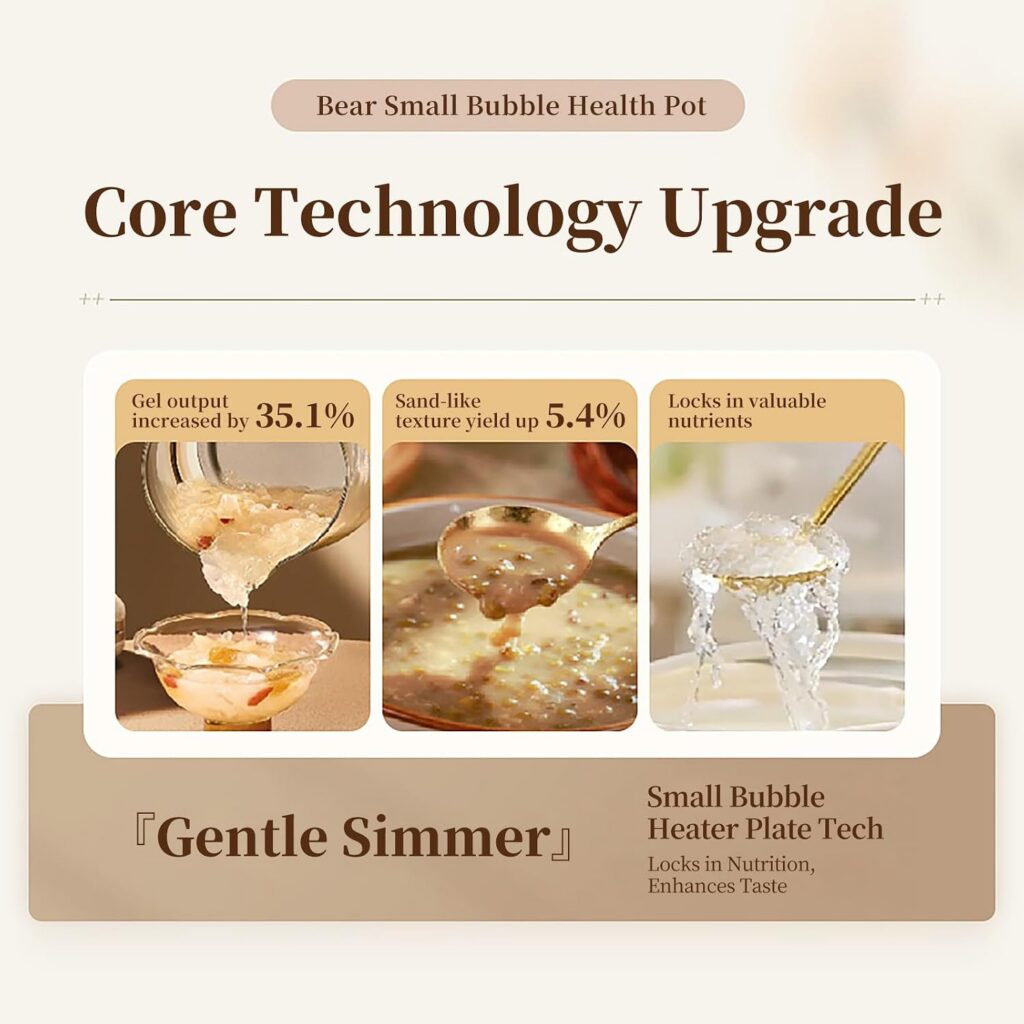
That is where a health pot or multi-function beverage appliance has a different role. The Bear product material supplied for this article shows dedicated menu options for Boil, Soup, Scented Tea, Bird’s Nest, Tremella, and Grain Porridge, along with Preset and Keep Warm controls.
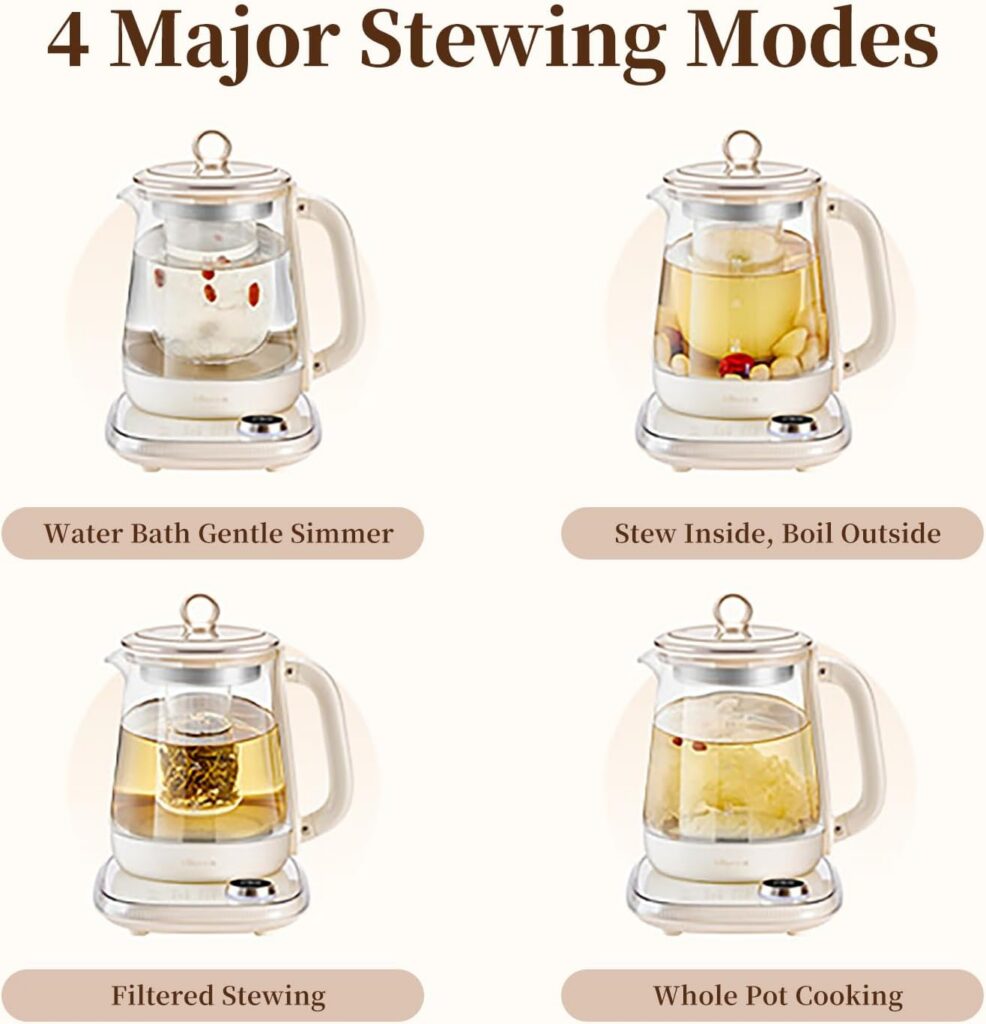
Instead of treating every task as a rapid boil, the appliance also offers four cooking approaches: water-bath gentle simmering, stew-inside/boil-outside cooking, filtered stewing, and whole-pot cooking. This gives users a clearer way to choose a suitable program for tea, soup, or slow-cooked recipes.
For tea-focused use, a Bear tea maker is designed around tea extraction, tea brewing, and coffee extraction functions. Distributors and brand buyers can also compare relevant product formats through the Coffee and Tea Series.
Safe Use and Care for an Electric Kettle
Use the appliance only for the ingredients and functions listed in its manual. A standard kettle should normally be used for water, while a multi-function health pot should be used according to its selected menu and capacity markings.
Keep the base, plug, and cable dry. Do not use an appliance with a damaged cord, cracked body, unusual smell, sparking, or repeated circuit trips. Unplug it before cleaning.
Mineral deposits can build up over time, especially in hard-water areas. Follow the manufacturer’s descaling instructions and avoid using cleaners inside the kettle unless they are specifically intended for kettle descaling.
For distributors or private-label buyers planning a coffee, tea, or health-pot assortment, contact Bear to discuss suitable product categories and market requirements.
FAQs
How does an electric kettle work step by step?
Power enters through the base, heats the internal heating element, transfers heat to the water, and stops when the temperature-control system detects the selected condition.
How does a kettle know when to stop boiling?
Most modern kettles use a temperature or steam-sensing control system. When water reaches boiling point, the control cuts power to the heating element. Product designs differ, so users should always follow the model-specific manual.
Can I boil milk in an electric kettle?
Do not assume that a standard electric kettle is suitable for milk. Milk can scorch, foam, and leave residue. Only use milk or other ingredients when the product instructions clearly permit them.
What is the difference between an electric kettle and a health pot?
An electric kettle primarily heats water. A health pot may include dedicated programs, controlled heating, preset timing, keep-warm functions, and cooking modes for tea, soup, or other permitted recipes.
What should a distributor consider when selecting a kettle range?
Start with customer use cases: rapid boiling, temperature-controlled drinks, tea preparation, or multi-function cooking. Then compare capacity, control functions, materials, certification requirements, cleaning needs, and the intended market.

One Response