
Table of Contents
Is hot pot Chinese or Korean? The short answer is Chinese: when people say “hot pot” in English, they usually mean the Chinese shared meal known as huǒguō. Korean cuisine has its own shared-pot dishes, especially jeongol, with different broths, seasonings, and ways of serving the meal. Both are made for gathering around a simmering pot, but they should not be treated as exactly the same dish.
The easiest way to understand the difference is to look at the broth, ingredients, dipping sauces, and the way everyone cooks at the table.
Is Hot Pot Chinese or Korean? The Short Answer
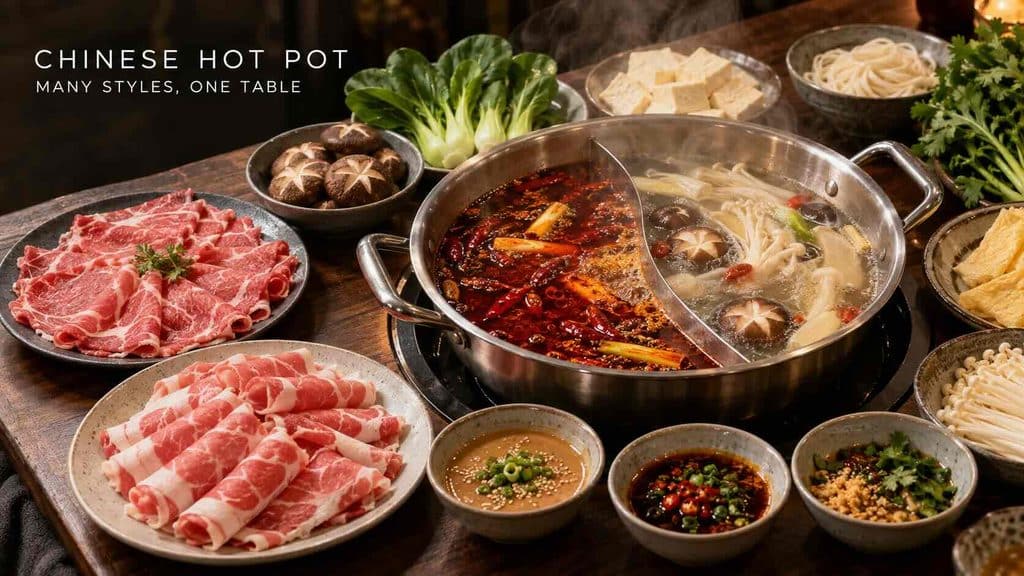
Chinese hot pot is a widely recognised style of communal dining. A pot of broth sits in the middle of the table, and diners cook thinly sliced meat, seafood, tofu, mushrooms, vegetables, and noodles themselves.
There is no single Chinese hot pot recipe. Sichuan-style mala broth can be spicy and numbing, while Cantonese-style broths are often lighter. Beijing mutton hot pot, mushroom broth, tomato broth, and clear soup bases all show how varied Chinese hot pot can be.
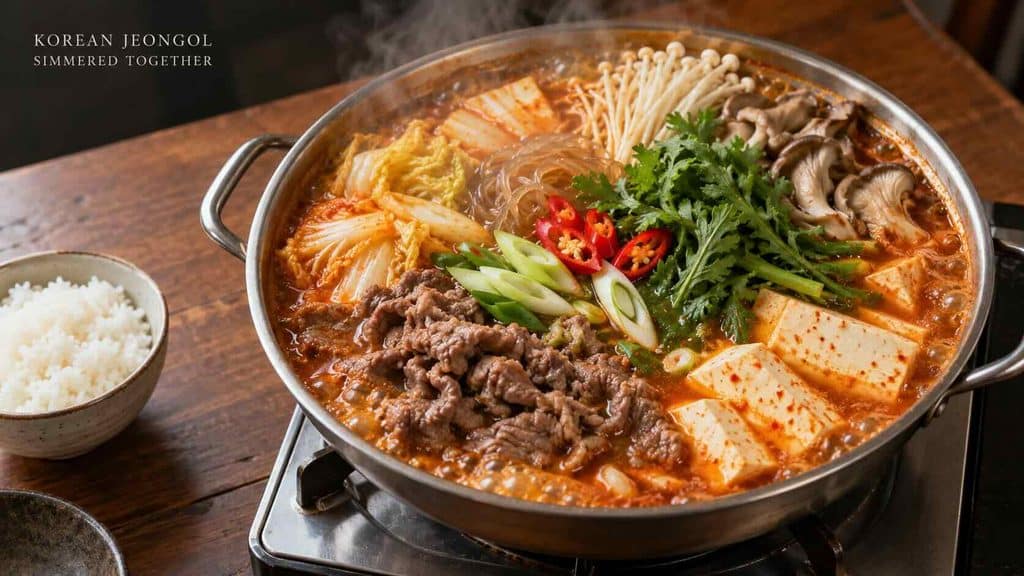
Korean cuisine also has several shared-pot dishes. Jeongol is a Korean hot-pot-style dish in which ingredients are arranged and simmered together in broth. Korea.net includes jeongol among the dishes served on the traditional Joseon royal table, showing its established place in Korean cuisine. Read the Korea.net overview.
Is Hot Pot Chinese or Korean? Compare the Table
Chinese and Korean hot pot share the idea of cooking and eating together, but the dining experience often feels different.
| Feature | Chinese Hot Pot | Korean Jeongol and Similar Shared-Pot Dishes |
|---|---|---|
| Broth | Can be spicy, mild, herbal, tomato-based, mushroom-based, or clear | Often savoury, rich, and built around ingredients such as kimchi, chilli paste, anchovy stock, or beef stock |
| How food is served | Diners commonly add and cook ingredients individually | Ingredients are often arranged together before the pot reaches the table |
| Dipping sauces | Sesame paste, soy sauce, vinegar, garlic, chilli oil, and fresh herbs are common | Sauces may feature soy sauce, sesame oil, garlic, chilli, or mustard |
| Typical ingredients | Thinly sliced beef or lamb, tofu, fish balls, mushrooms, greens, noodles | Beef, pork, seafood, mushrooms, tofu, vegetables, glass noodles, kimchi, and rice cakes |
| Meal style | Highly customisable for each diner | Often designed as one prepared combination of ingredients and broth |
So, Chinese vs Korean hot pot is not about deciding which one is “better.” They are two different shared dining traditions with different flavour profiles and table habits.
Chinese Hot Pot vs Korean Hot Pot: What Should You Cook?
Choose Chinese hot pot when you want everyone to build their own meal. It works well with several broth choices, many dipping sauces, and a long list of ingredients placed around the table.
Choose Korean-style jeongol when you prefer a more composed dish. You can arrange vegetables, sliced meat, mushrooms, tofu, and noodles before cooking, then let the flavours develop together in one broth.
For either style, prepare ingredients in similar sizes so they cook at a similar pace. Keep raw meat and ready-to-eat foods separate, and follow normal food-safety practices when handling and cooking ingredients.
Enjoy Hot Pot at Home With Bear Electric Cookers
An electric cooker makes it easier to enjoy a shared hot pot meal at home because it brings the cooking pot directly to the dining table. The right model depends on how many people you are serving and whether you want only hot pot or a combination of cooking styles.
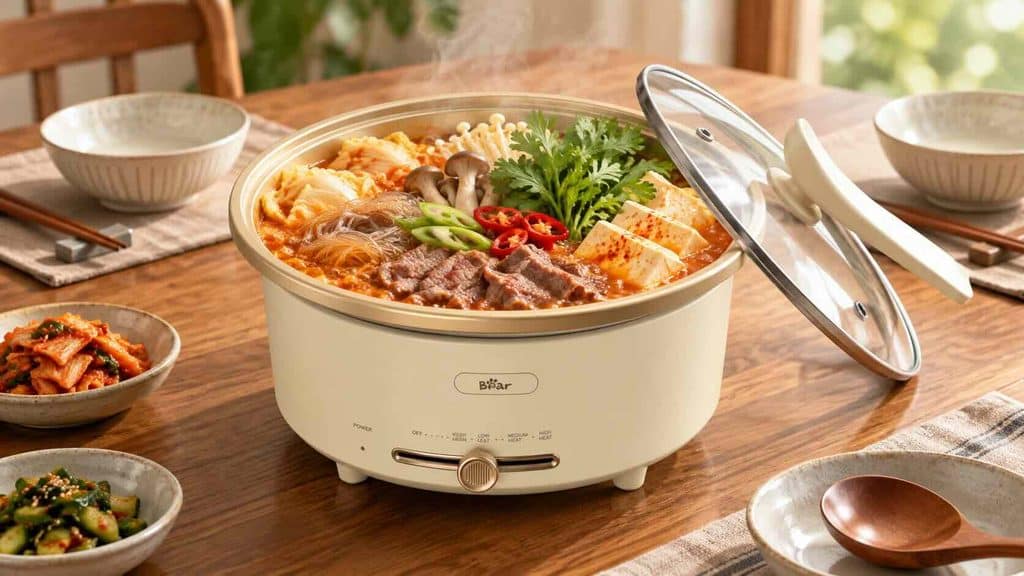
For a larger shared meal, the Bear 6L Electric Multi Cooker includes hot pot among its listed functions, along with steaming, baking, frying, stewing, and braising. It also combines a hot pot zone and grill zone in one appliance.
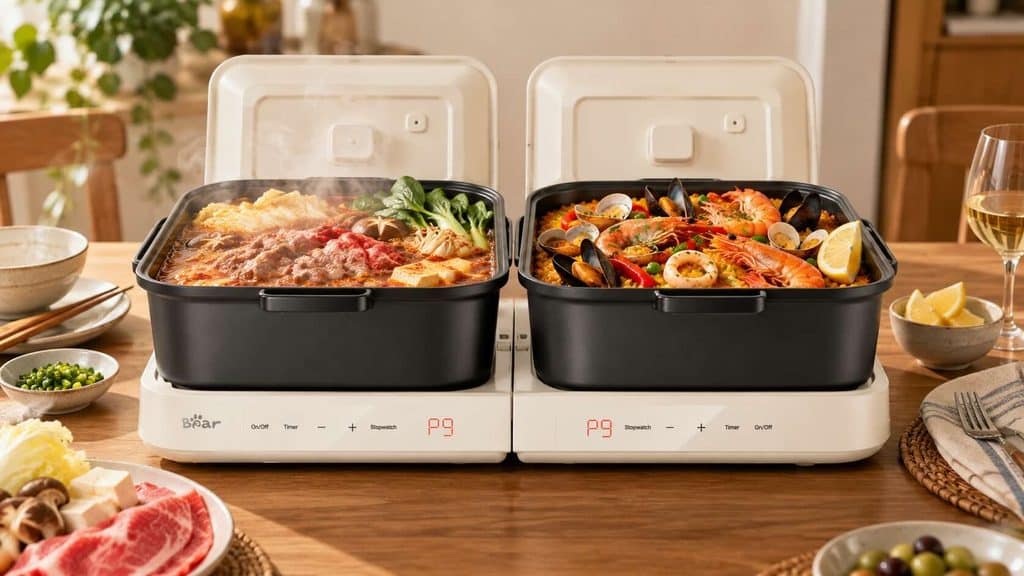
If you prefer a meal that combines grilling with a simmering pot, explore the Bear dual-zone electric multi cooker. For more products designed around shared meals, visit the Bear Dinner Series.
Use any electric cooker only within its stated capacity and functions. Follow the product manual for water levels, cooking settings, cleaning, and safe operation.
For retailers, distributors, and buyers looking for electric cooking products for their local market, contact Bear to discuss suitable Dinner Series options.
FAQ
Is hot pot Chinese or Korean?
Hot pot is most commonly associated with Chinese cuisine. Korean cuisine has related shared-pot dishes, especially jeongol, but they have their own ingredients, broth styles, and culinary identity.
Is hotpot Korean?
Korean cuisine includes hot-pot-style dishes, but hot pot as the term is most often used for Chinese huǒguō. Korean jeongol is a distinct Korean shared-pot dish.
What is the main difference between Chinese and Korean hot pot?
Chinese hot pot usually lets each diner cook chosen ingredients in a shared broth. Korean hot pot dishes often arrive with ingredients already arranged together and simmered as one combination.
What should I put in an electric hot pot?
Common choices include sliced meat, tofu, mushrooms, leafy vegetables, noodles, dumplings, seafood, and a broth that suits your preferred flavour. Choose ingredients that fit your appliance capacity and cook them thoroughly.
Can a Bear electric hot pot be used for more than hot pot?
This depends on the model. Some Bear electric multi cookers list additional functions such as steaming, grilling, frying, stewing, or braising. Check the relevant product page and product manual before use.

One Response